
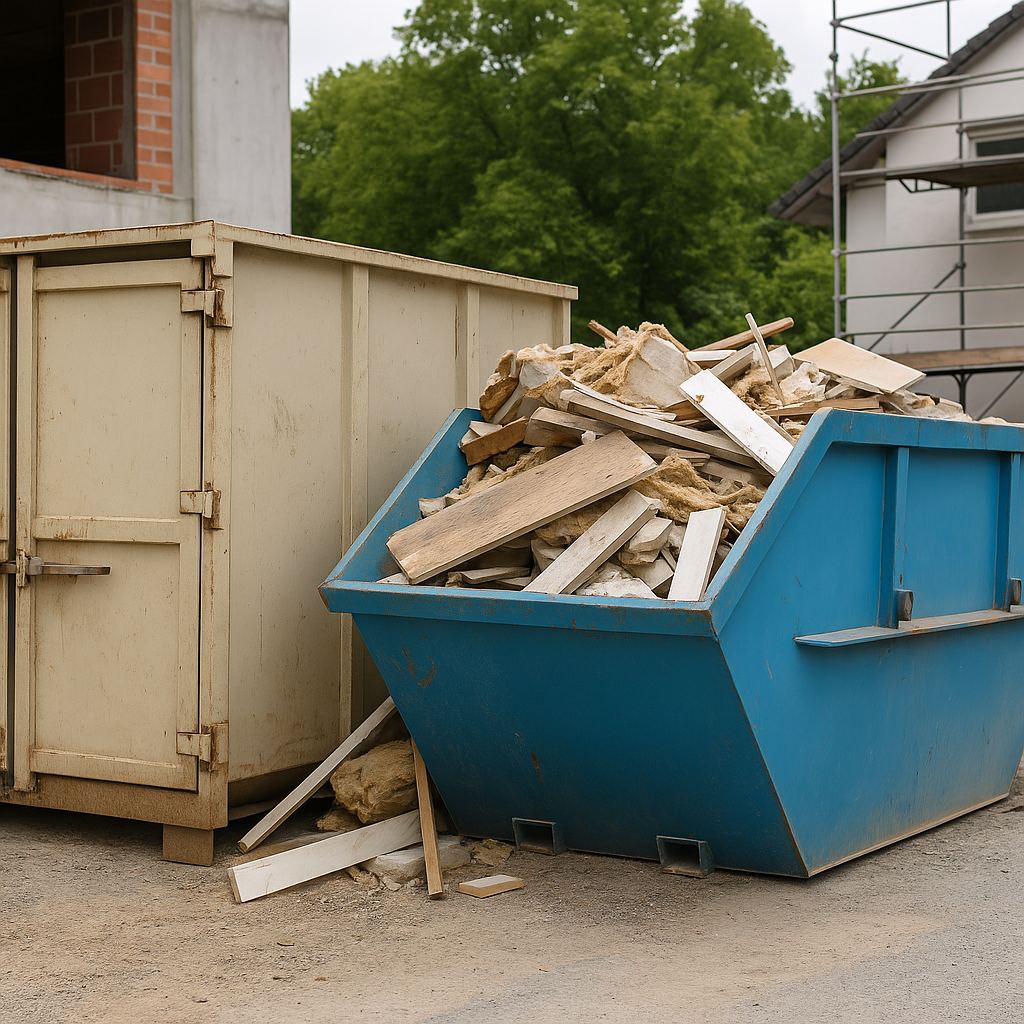
Container rental has become an essential solution for efficient waste management during construction, renovation or moving projects. However, it’s essential to know which type of container is best suited to your needs: residential or worksite. These two options have different uses, characteristics and constraints.
In this article, we’ll look at the differences between these two types of container, their respective advantages, the selection criteria to consider, and the mistakes to avoid when renting. In the end, you’ll know exactly which container to choose for your project.
What is a residential container?
The residential container is designed for small- to medium-scale use, mainly in a private setting. It is ideal for :
- Moving
- Garage and basement cleaning
- Minor renovations (floors, bathrooms)
- Seasonal storage
Features :
- Compact size: usually between 10 and 20 cubic yards
- Easy to place on a driveway or small parking lot
- Suitable for household waste and light materials
📘 Also read: Container rental: the ideal solution for a stress-free move
What is a worksite container?
The site container is intended for heavier projects, often carried out by contractors, SMEs or on construction sites. It’s perfect for :
- Major renovations
- Partial or complete demolition
- Work on commercial or multi-occupancy buildings
- Exterior work (roofing, earthworks, concrete)
Features :
- Larger capacity: up to 40 cubic yards
- Reinforced construction for heavy materials (concrete, brick)
- Requires larger parking space
- Sometimes subject to strict municipal regulations
📘 Also read: Container rental for worksites: 8 common mistakes to avoid
Comparison: residential vs. construction
| Criteria | Residential container | Worksite container |
|---|---|---|
| Capacity | 10 to 20 cubic yards | 20 to 40 cubic yards |
| Type of waste | Light to moderate | Heavy, bulky |
| Project type | Moving, small sorting, minor renovation | Construction and demolition sites |
| Permits required | Rarely | Often |
| Accessibility | Private driveway, parking | Construction site, street |
| Typical user | Individual | Contractor, site manager |
Which container is right for you?
➤ Renovating a bathroom
👉 A 10- or 14-cubic-yard residential container is all you need.
📘 See: How to choose the right container size for your renovation project?
📘 Read also: Why renting a container is the best option for your home renovations
➤ You’re re-roofing a duplex apartment
👉 Worksite container recommended: shingles, wood, nails, heavy materials.
➤ You’re moving house and want to do some sorting
👉 The residential container is ideal for disposing of furniture, old appliances and mattresses.
➤ You’re an entrepreneur managing several projects
👉 Opt for a fleet of site containers, with fast turnaround provided by SMAG Express.
Regulatory aspects not to be overlooked
For a residential container :
- Parked on private property → no permit required
- Public street → temporary city permit required
For a site container :
- Permit required if on public roads
- Compliance with site safety and signage standards
Our experts at SMAG Express can help you obtain the necessary permits.
Pricing: the difference between the two
Residential container :
- Fixed rates according to size (10 to 20 cubic yards)
- Average duration: 3 to 7 days
- Costs vary according to type of waste (weight, type)
Building site container :
- Volume AND tonnage pricing
- Continuous rotation possible on long jobsites
- Rental over several weeks or months
💡 Tip: group similar waste together to optimize sorting costs.
Environmental impact
At SMAG Express, all containers – residential and worksite – are emptied at certified sorting centers.
The following materials are recycled as a priority:
- Untreated wood
- Metal
- Cardboard
- Crushed concrete
Proper sorting at source, by you or your contractor, significantly reduces your carbon footprint.
Comparative testimonial (fictitious)
“For my small renovation projects, I always rent a SMAG residential container. It’s fast, clean and fits in my yard. But when I’m managing roofs or extensions for my customers, I switch to the worksite model, with larger volumes.”
– Alex G., general contractor in Montreal
Errors to avoid when choosing
- Underestimating the size required
Always allow for a safety margin of 10-20%. - Ignore prohibited materials
Paint, gas cans and tires don’t go in any container. - Placing the container without authorization
Especially in town – check the rules before delivery. - Overfill the container
Never overfill the walls, otherwise overflow charges will apply. - Rent a site model for a light project
You’ll pay too much for nothing – adjust to your real needs.
FAQ – Frequently asked questions
1. Can I use a residential container for my exterior renovations?
Yes, as long as the materials remain light (wood, nails, tiles).
2. Are construction site containers accessible to private individuals?
Yes, but they are often oversized for small projects.
3. Is the residential container suitable for winter use?
Yes, it’s waterproof and stable, even in freezing conditions.
4. Can I change models after delivery if the size is not right?
Yes, SMAG Express can rotate quickly with a larger model.
5. Do I have to sort my waste first?
Yes, especially for recyclable or hazardous materials. This optimizes costs and reduces environmental impact.
Conclusion
The choice between a residential container and a worksite container depends primarily on the scale of your project, the nature of the materials to be evacuated and the configuration of the site. Both solutions offer considerable advantages in terms of logistics, safety and productivity.
With SMAG Express, you benefit from :
- Personalized support
- Fast delivery
- An eco-responsible sorting service
- Transparent pricing with no surprises
📞 Contact us now for the ideal container for your construction site or home.

